Set up a dedicated agent in HaloPSA for Neo Agent to use when performing actions, logging time, and updating tickets
To enable Neo Agent to add notes, log time, and perform actions within your HaloPSA system, you need to create a dedicated agent (resource) that Neo Agent will impersonate.
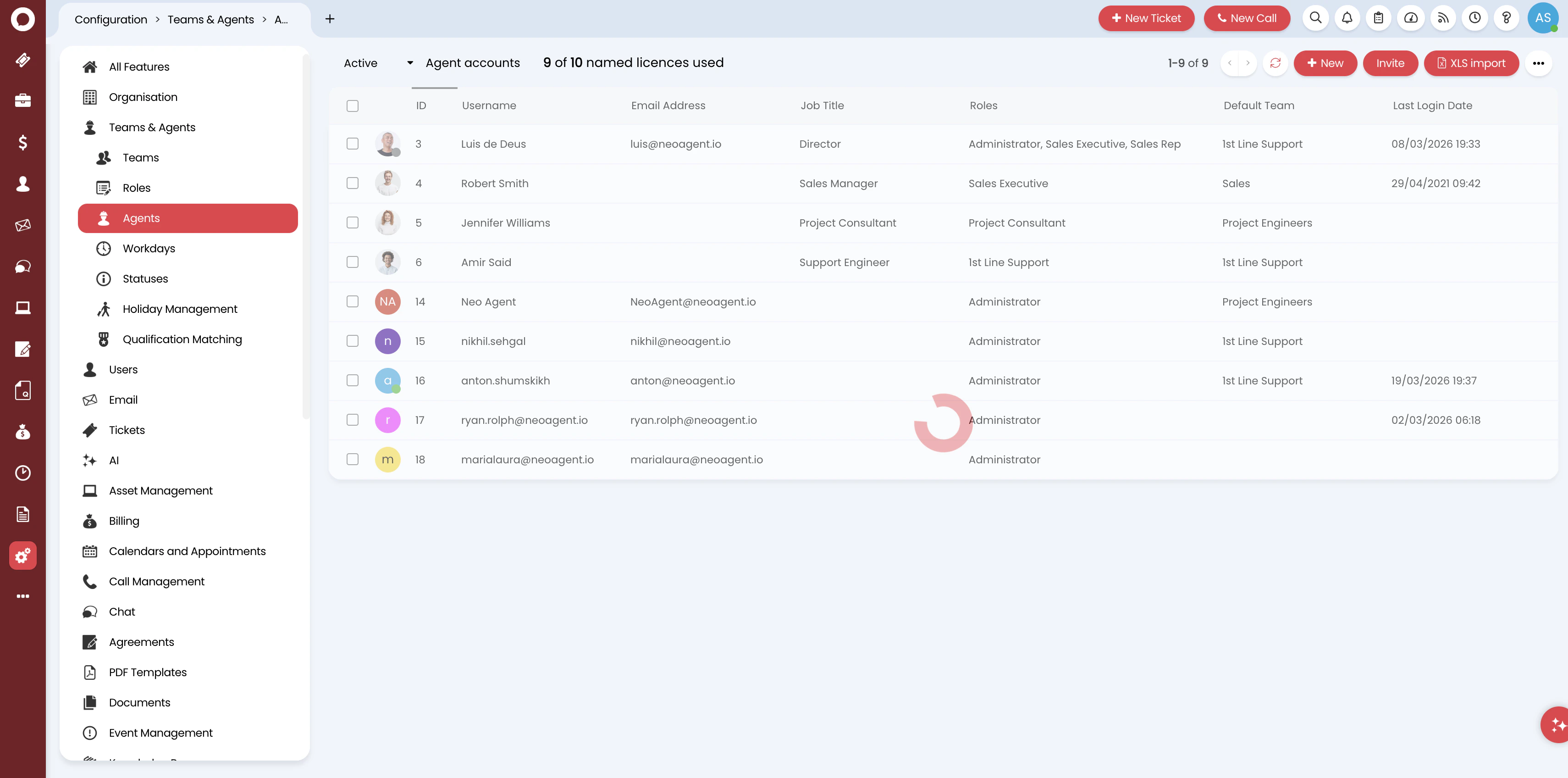
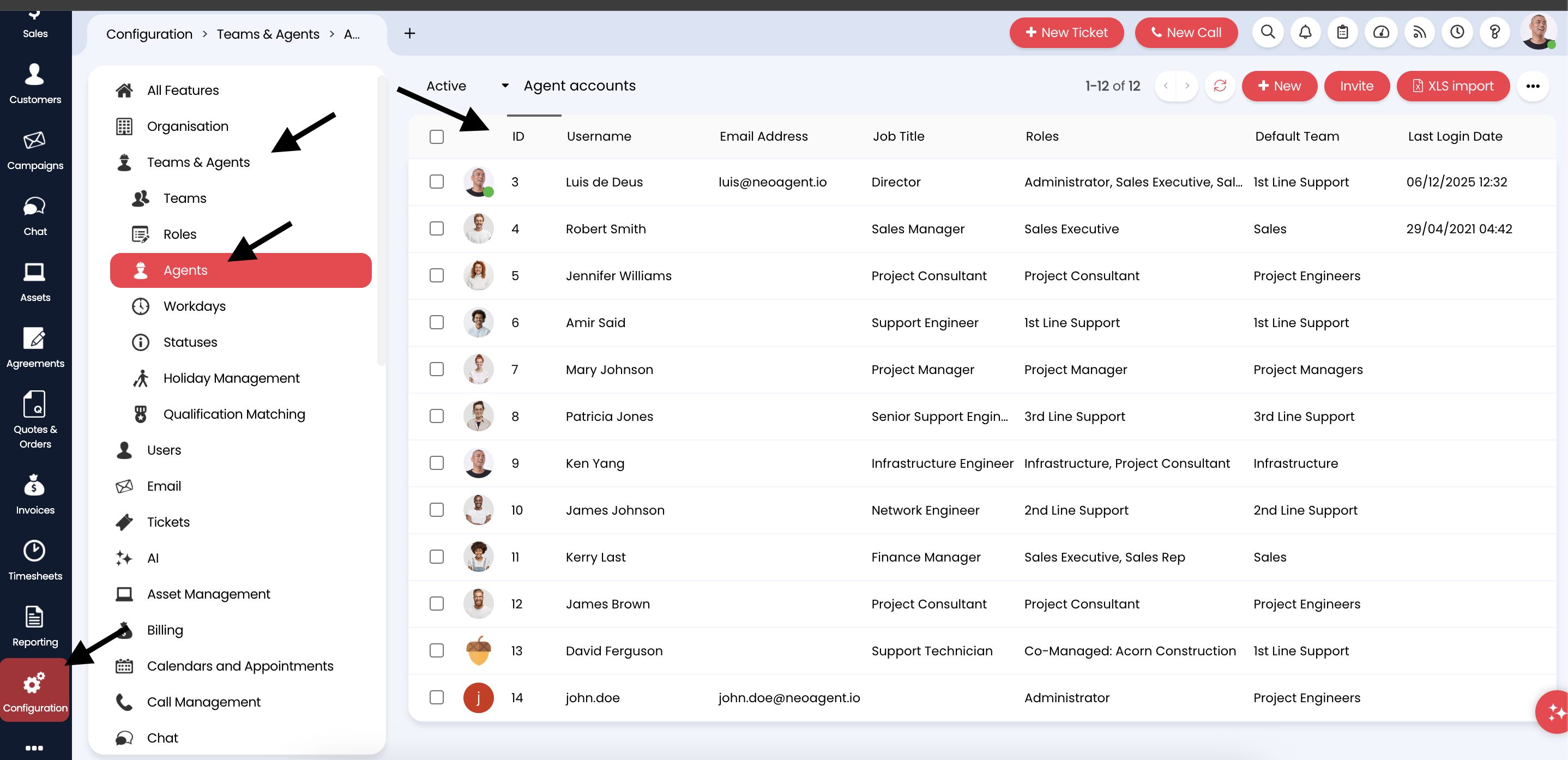
Go to Configuration → Teams & Agents → Agents to access the agent accounts list.
The Agents list shows all agent accounts with their IDs, usernames, and team assignments
Click New to create a new agent resource.
2
Configure account details
Fill in the essential account information:
Username: Enter a descriptive name like Neo Agent
Email Address: Set to psa-noreply@neoagent.io, or use an address on your own domain such as neo@yourcompany.com
Password: Set any password. Neo Agent uses API authentication, not the UI
Roles: Select an appropriate role (e.g., 1st Line Support or Administrator)
Account Active: Ensure this is checked
Is an API-only Agent: Leave unchecked. Neo Agent needs to assign tickets to itself and create time entries, which require a full agent account
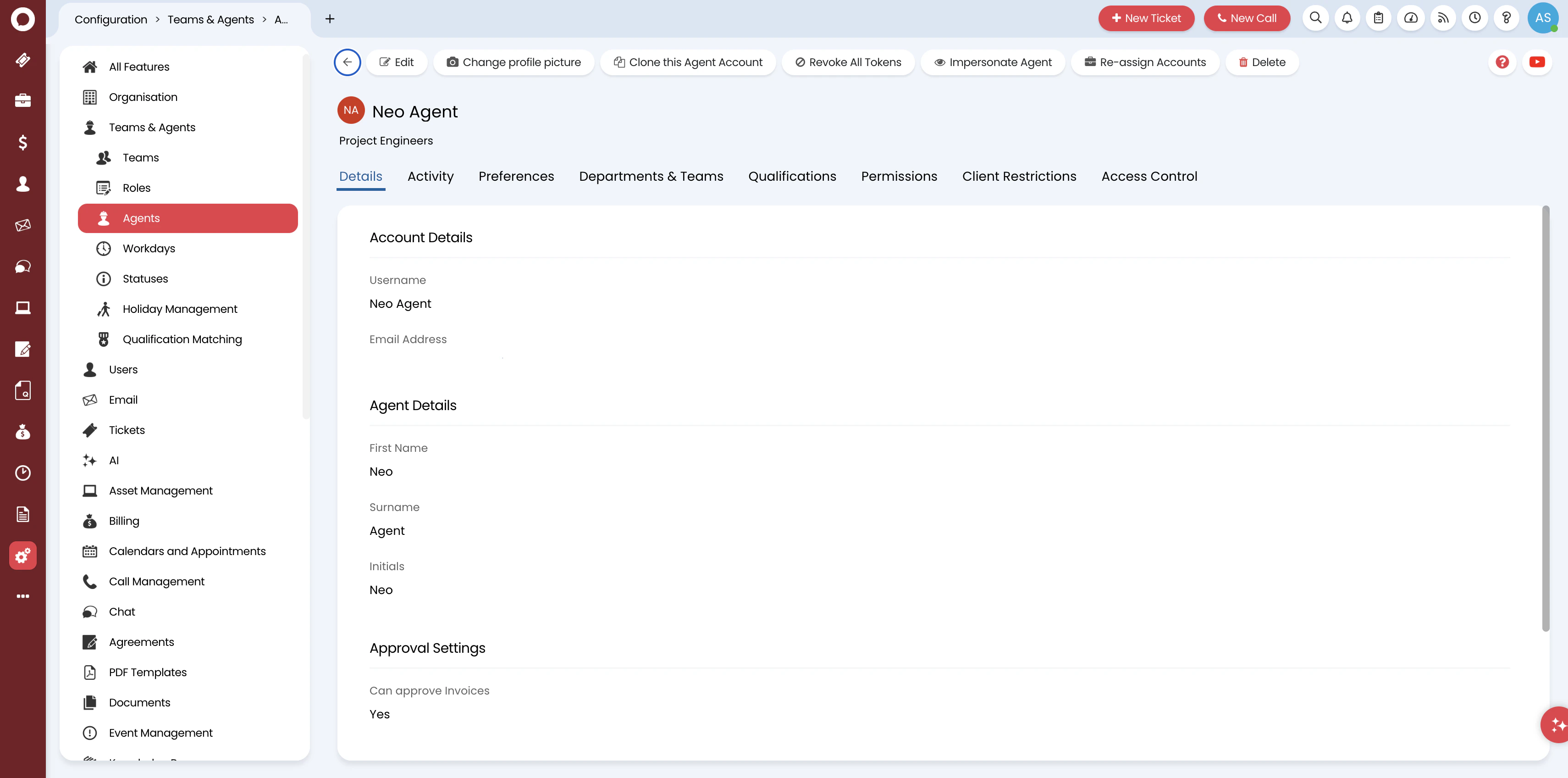
Configure the agent's account details: username, email, role, and active status
Use psa-noreply@neoagent.io here, never another @neoagent.io address such as team@neoagent.io. HaloPSA mails agent notifications — “New Ticket Logged”, “Ticket Updated by User”, and any other rule the agent’s roles subscribe it to — to whatever address sits on the agent record. psa-noreply@neoagent.io discards everything it receives. Any other Neo address delivers your ticket notifications, and the customer data inside them, to a Neo inbox instead of your team’s.Neo itself never reads this field. The API application authenticates with its own credentials and the agent ID.
The name you choose will be visible in ticket histories, time entries, and notes. Use “Neo Agent” for clear attribution, or a real person’s name if you want end-user communications to feel more personal.
3
Assign to a team
Navigate to the Departments & Teams tab and assign the agent to the appropriate team(s) that handle tickets Neo Agent will work on.
The agent must be assigned to at least one team to appear in team-scoped ticket views and to be assignable to tickets.
4
Configure working hours and timezone
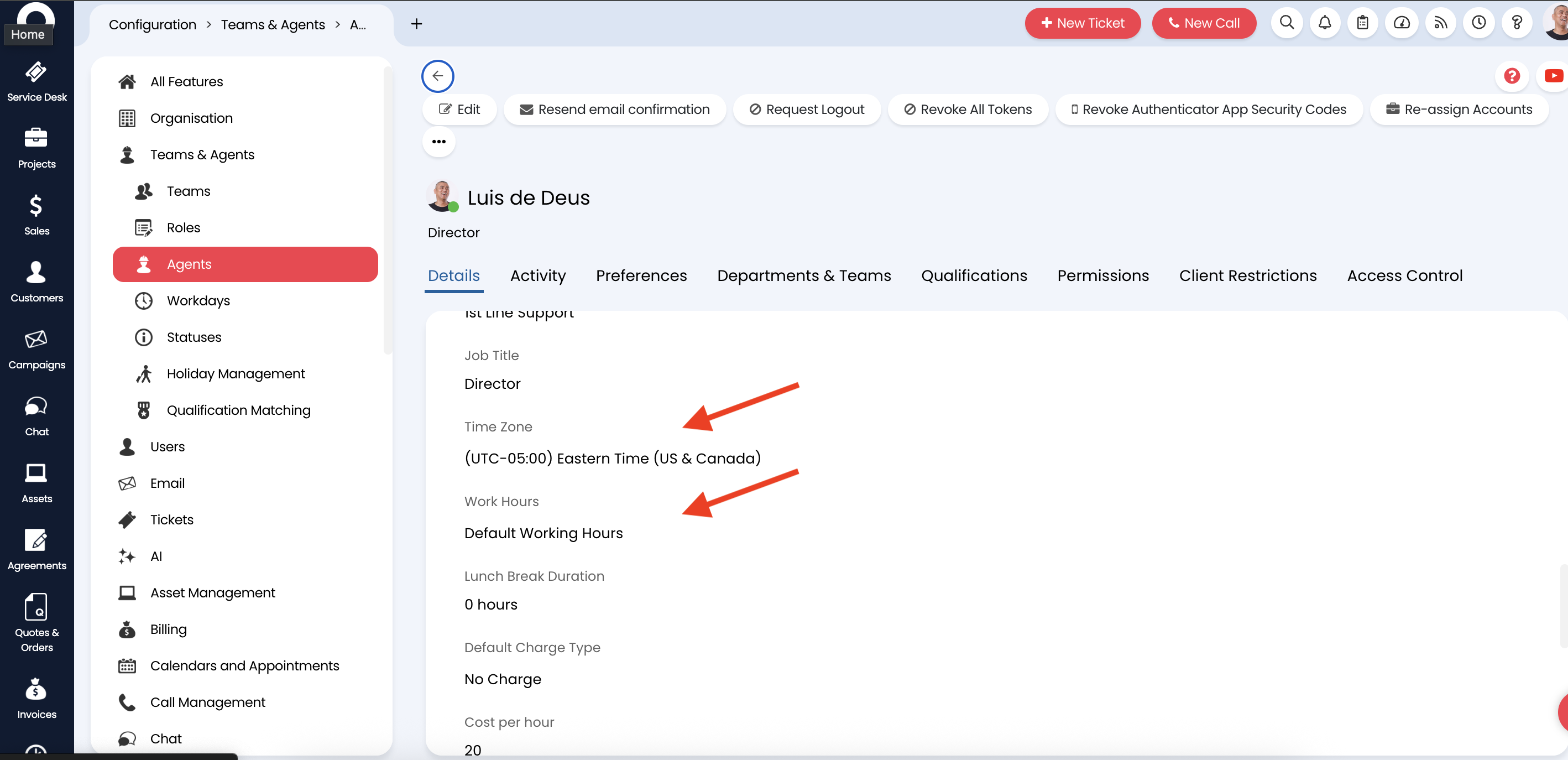
In the Preferences tab, set the agent’s Working Hours and Timezone to match your primary support hours.
Set the agent's working hours and timezone in the Preferences tab
The timezone setting affects how time entries are recorded. Set it to your primary service region’s timezone.
5
Save and note the Agent ID
Click Save to create the agent. After saving, note the Agent ID in the ID column on the Agents list page.
Find the Agent ID in the ID column on the Agents list page
Record the Agent ID. You need it when creating the API application and connecting to Neo Agent.
Excluded companies keeps a company’s tickets out of Neo’s sync and triggered agents. A scheduled agent or Chat Agent reads the PSA as the account Neo signs in with, so to keep those agents away from a company too, restrict that account.In Halo, the role of the agent the API application logs in as decides which clients Neo can see:
In Configuration > Teams & Agents > Roles, create a role for Neo with the permissions it uses (a 1st Line Support-style role), not Administrator: with Halo’s “Give admins additional privileges” setting on, Administrator overrides every restriction. Under Client Restrictions, add every client except the ones to hide.
Give the Neo agent that role and remove every other role. Halo adds up the access of all of an agent’s roles, so a remaining unrestricted role keeps every client visible.
Client Restrictions is an allow-list: an empty list means all clients, and a new client stays hidden from Neo until you add it. Afterwards, check in a chat with Neo that it can open a ticket of a listed client and cannot open one of a hidden client. Leaving a team out of the agent’s teams hides only that team’s tickets, so it works for a client only when its tickets sit on a team of their own.